

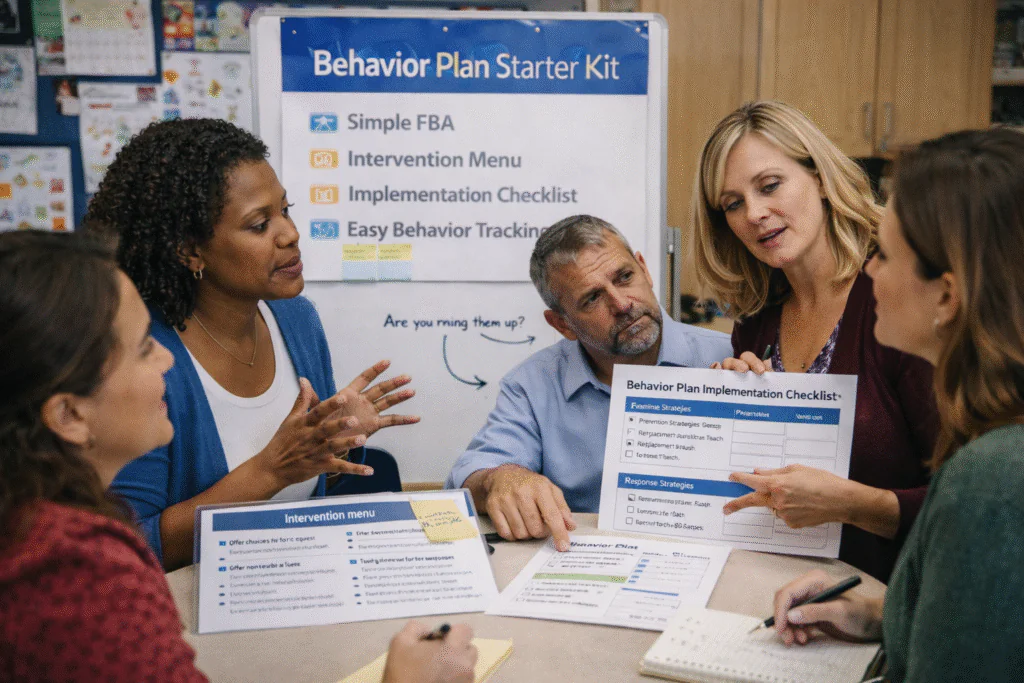
A behavior plan isn’t a document. It’s an agreement.
And without a shared process to build and implement it, the plan won’t survive real school days.
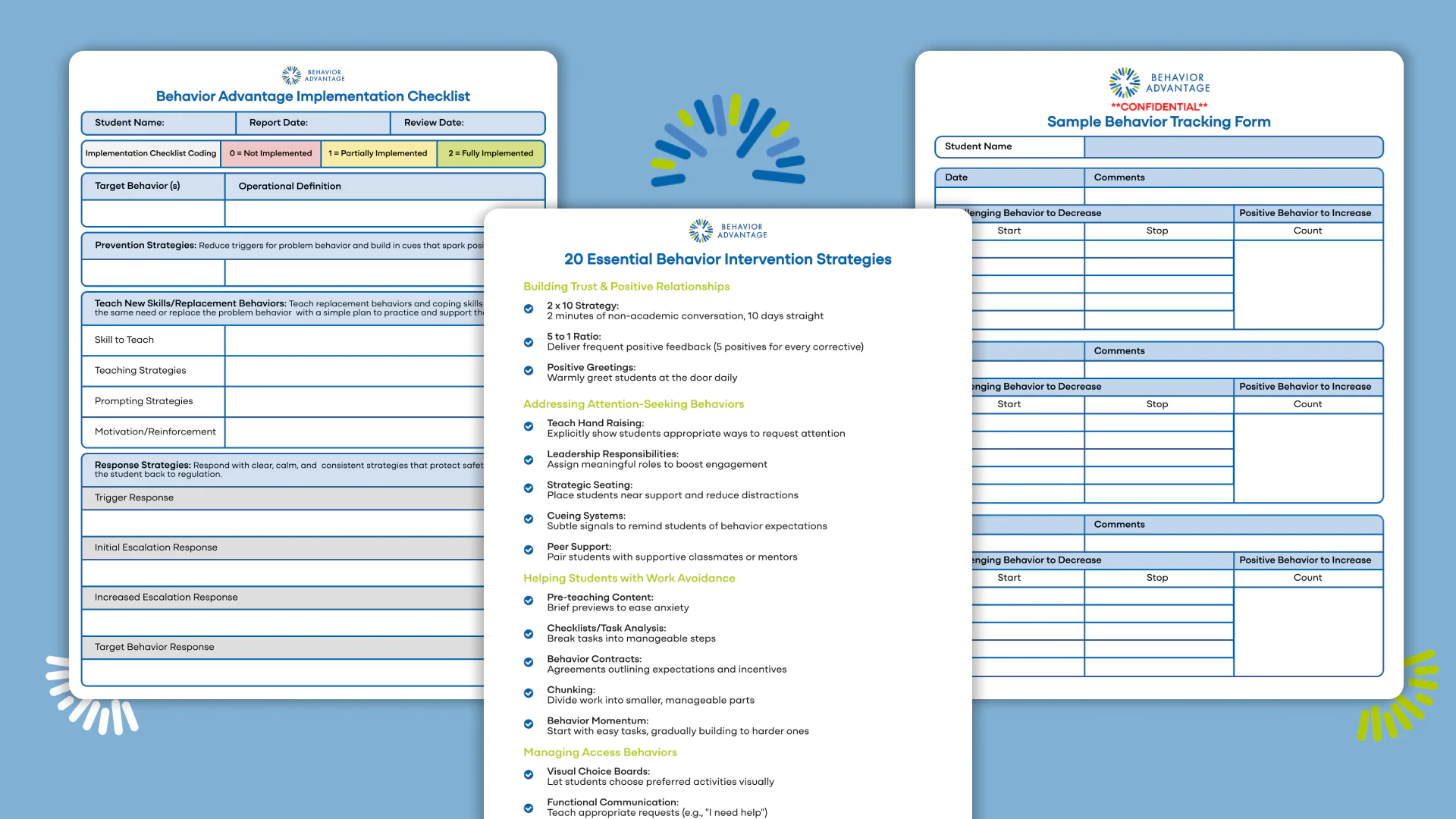
The Behavior Plan Starter Kit is a practical, team-based workflow schools can use to move faster on behavior planning, support consistent implementation, and stay solution focused.
It’s designed for real school teams working together to help a struggling student build new skills and experience success.
You can use this process for Tier 2 supports, early Tier 3, or when behavior concerns are starting to escalate and teams need clarity.
What’s Included in the Behavior Plan Starter Kit
The Starter Kit includes a powerful set of tools that help teams:
- clarify the patterns and function of behavior
- select a few high-impact interventions
- support staff follow-through
- and track progress without overwhelming data collection
You can download the full bundle here:
Download the Behavior Plan Starter Kit
Who This Starter Kit Is For
This Starter Kit is for school teams supporting a student who is struggling with behavior and needs a clear, consistent plan.
It’s commonly used by:
- teachers and support staff
- school psychologists and counselors
- administrators supporting implementation
And it’s most helpful when teams need to move quickly, align around function, and support consistent implementation across adults and settings.
How to Use the Behavior Plan Starter Kit
Step 1: Get the Team Together
Start with a short, focused meeting that includes the adults who work with the student every day, especially the teachers, support staff, paraeducators, and administrators who will be implementing the plan in the target setting.
The goal is simple: shared understanding and shared ownership.
This step doesn’t need to take long, but it’s an important moment to make sure everyone feels heard, aligned, and ready to build a team-based plan together.
Step 2: Complete a Simple FBA
At this team meeting, use the Simple FBA form to:
- prioritize and clarify one behavior to focus on
- identify one target routine to initiate support
- determine and prioritize the likely function(s)
- and identify the replacement skills we want to teach
This keeps the team focused on the why behind the behavior, the where to start, the what to teach, and prevents jumping straight to interventions without clarity. Remember, the team is agreeing on one behavior in one routine to prepare the team to build one simple plan that can be implemented consistently.
The Simple FBA is designed to organize and consolidate existing data and staff input to support teams in thinking functionally about behavior, not to conduct a comprehensive Functional Behavior Assessment report or collect new assessment data.
Step 3: Select Essential Interventions
Choose only the most practical and impactful strategies that match the context and function of the behavior.
Consistency matters more than complexity. A few strategies implemented well will always outperform long plans that never get used.
Let the team’s shared experience guide the conversation so the plan matches what’s actually happening. Then use the List of 20 Essential Behavior Intervention Strategies to ensure you’re choosing interventions that fit the need, not guessing.
Step 4: Use the Implementation Checklist
The Implementation Checklist can be used to outline the Behavior Plan, as well as, guide implementation once the full plan is developed. Map out 1–2 prevention strategies, identify the replacement skills to teach and practice, and outline clear, consistent responses so staff can respond calmly and support de-escalation.
Once the plan is in place, the checklist helps teams define:
- what each strategy should look like in practice, and
- the degree to which each strategy is being implemented.
This form can be used to guide training and initial implementation, then completed over the following weeks during supportive check-ins or teacher self-reflection. It turns plans into action by helping teams monitor follow-through and ensure strategies are implemented as intended.
Step 5: Track Two Behaviors (One to Decrease, One to Increase)
Data collection doesn’t have to be complicated to be useful.
The Starter Kit provides a sample Behavior Tracking Form that focuses on:
- one priority behavior to reduce, and
- one positive or replacement behavior to increase
Fill out the form with the two agreed-upon behaviors, train staff to use it, and collect data daily. Focusing on one consistent routine keeps data collection manageable and provides the information needed to determine whether the plan is working.
Tracking a behavior to increase keeps the focus on teaching skills, not just managing problems. You don’t need to track everything, only the behaviors that matter most to determine whether the plan is working.
Because behavior change isn’t linear, graphing data is essential for seeing patterns, monitoring progress, and guiding next steps in a way that can be sustained over time. Behavior Advantage supports this with efficient data entry and automated graphs.
Once data is collected, the team can decide how they want it graphed to best support decision-making.
Step 6: Optional Collaboration to Build a Full BIP
Once your Starter Kit forms are filled out (even partially), you can schedule a Behavior Plan Starter Kit Collaboration with a Behavior Advantage BCBA.
In this collaboration, we will:
- review your completed forms
- turn them into a full BIP report
- graph your data
- connect your Implementation Checklist to short PD videos and resources
- and help you plan next steps for implementation
This is often the easiest way for teams to move from working documents to a fully supported behavior plan.
To keep things simple and FERPA-safe, please remove student names or personally identifiable information before sharing Starter Kit forms. Initials or placeholder names are just fine for collaboration.
Ready to Take the Next Step?
You can download all Starter Kit tools here and use it to collaborate on your next plan: